Searching 2601 Articles

Sponsors

What's Happening Now

chris1203 answered Speaking of Space
chris1203 answered If you could live a green life
stavy answered vegetarians....
stavy has just voted on an answer
stavy answered Drinking bottled water...
Your Logo Here - Sponsor this module

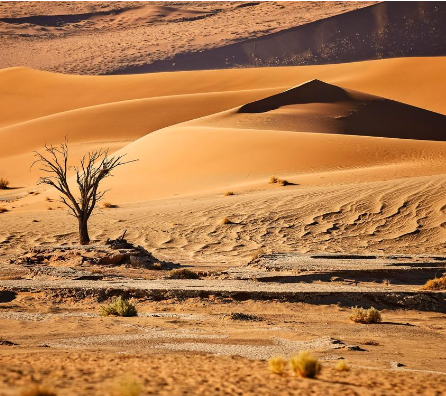
Sahara Solar Project Could Make Germany Masters of the Solar Race

Posted on Thu Jul 2 2009
By: in , ,
Cars are Germany’s principal employment generator. Come 2050, it could be the solar industry. Germany's Wuppertal Institute for Climate for Greenpeace and the Club of Rome says that if the right political push is given from now onwards, more than 580,000 jobs in concentrated solar power (CSP) could be created worldwide by the middle of this century.

Concentrated solar power uses mirrors to harness the sun's rays to produce steam and drive turbines to produce electricity. Solar thermal power still remains more expensive than fossil fuels but political backing and government incentives could see a push in this area. But the project in the line of sight promises to tilt the scales on the side of power generation and employment.

A project envisaged that will link power generated in Sahara to its use in Europe and North Africa could create 240,000 German jobs and generate 2 trillion Euros ($2,822 billion) worth of power by 2050. The study also projects that double that number of jobs could be created worldwide with the right political climate.


Green Bathroom Ideas

Posted on Thu Jul 2 2009
By: in , ,

Adding pieces to your bathroom such as a dressing table or updated sink can be costly and a waste of raw materials. With a little creativity and a lot of ingenuity, you can transform regular pieces of furniture into functional bathroom items. The enhancements can make your bathroom appear like new in an eco-friendly way.

There are a variety of inexpensive routes you can take to recreate your bathroom. For example, you can transform office furniture into multi-purpose pieces. A desk can be cut down to fit against the wall so it serves as a dressing table. The larger drawers can be taken out, and you can soften the look of the furniture by replacing the existing drawers with basket drawers. Although there will still be office like elements, small details and adjustments can detract from this.

Dust In Mountains Increasing Snowmelt

Posted on Thu Jul 2 2009
By: in , ,

San Juan Mountains, ColoradoIn the recent edition of the Proceedings of the National Academy of Sciences, researchers reported their findings concerning dust accumulation in the mountains. According to the researchers, increasing dust in mountain areas are disrupting snowmelt.

The co-authors of the study were Chris Landry, director of the Center for Snow and Avalanche Studies in Silverton, Colorado and Heidi Steltzer, a researcher scientists at Colorado State University. The set up an experiment using test plots in the San Juan Mountains in Colorado. Some of the test plots were left to accumulate snow and dust naturally, some had additional dust placed on the snow and others had the dust removed.

The researchers concluded that the increasing dust cover is altering the snowmelt timing. The increased dust is attributed to increased human activity in the desert and due to global warming. Global warming has caused some areas to become drier and therefore they contribute more dust.


Vertical Farming Could Be the Future Trend of Agriculture

Posted on Wed Jul 1 2009
By: in , ,


With ever increasing population, there is only one place to grow and that is up.

Dickson Despommier, a professor of public health at Columbia University in New York defines the problem

"In another 40 years, there'll be another three billion people. That's the problem. We have to find another way to feed them."

One solution has proposed itself. Use skyscrapers as vertical cultivation centers. Skyscraper farming may soon be a common sight in urban cities where space is finite and mega-cities expand horizontally and vertically. Scientists and researchers are seriously looking at skyscrapers to be the new agricultural zones. The other problem it might mitigate is that of carbon emissions. Food grains need no longer be shipped and tucked across large distances thus reducing the carbon footprint.


A Look Inside an Incinerator

Posted on Wed Jul 1 2009
By: in , ,

Can waste be burned efficiently and carefully? Well, the Heritage-WTI Incinerator in East Liverpool, Ohio strives to achieve this goal. This particular incinerator is one of the eight commercial incinerators in its county and 25-30% of the waste it receives comes from businesses and homes within a 100-mile radius of the plant. However, they do receive waste from places as far as California and Puerto Rico. Every employee has completed 40 hours of OSHA Hazwopper Training, and they work toward maintaining an environmentally friendly plant.

WTI primarily deals with organic waste and hazardous waste. The hazardous waste is industrial waste, which is waste that cannot be land filled (pharmaceutical rejects, reactor bottoms, reactor residues and sludges). On Earth Day the plant has local residents bring down household wastes such as paint and pool chemicals. So how is waste incinerated?

United States Grants First Ever Wind Farm Licenses

Posted on Wed Jul 1 2009
By: in , ,

The United States recently announced the first ever licenses for offshore wind farms. Five different leases were given to four different companies last week. The wind energy development would occur offshore of New Jersey and Delaware. The farms would be placed along the Outer Continental Shelf.

Unfortunately, until this point there have been no wind farms built in the United States. There have been numerous proposals of such farms, but none have been built as of yet. These leases are allowing for companies to attain information to determine the future of wind farms in particular areas. Meteorological towers will be placed in the proposed areas, anywhere from 6-18 miles offshore.

The companies given leases were: Bluewater Wind New Jersey; Bluewater Wind Delaware; Fishermen’s Energy of New Jersey; and Deepwater Wind (granted two leases). The entirety of the information attained from the meteorological towers will be used by the Interior Department’s Minerals Management Service in order to determine the placement of the wind farms.


Is There Hope for the Environment?

Posted on Tue Jun 30 2009
By: in , ,

Reading one book can encourage you to see things in a different perspective, and Thomas Berry’s The Great Work provides a brighter side to humanity’s future. When it comes to predicting the outlook of the environment, it seems as though there are more predictions for gloom and doom than anything else. However, Berry reminds us that we have the power to change the future.

The seemingly unending path of consumption that society is on is sure to lead us into trouble, especially when it comes to our natural resources. However, Berry makes a point that this path doesn’t have to continue. Individuals as well as businesses change their looks, thoughts and actions continuously, so we just need the nudge to reinvent ourselves as a society. Reinventing certain aspects of our current lives to secure the best interest of the earth will be a difficult task, but Berry predicts that this reinventing will take place in a “time-developmental context.”

Jatropha Trees Looked To For Biofuel

Posted on Tue Jun 30 2009
By: in , ,

Jatropha TreesSome are hoping that the biofuel of the future will be jatropha. Jatropha is a leafy tree which is essentially a wild plant. The plant grows in warmer climates, making it a more difficult biofuel sell in the United States.

Jatropha trees, which are already grown in India and Africa, coast about $6 each. In addition, the trees are capable of producing about two gallons of oil each once they reach maturity. Approximately 400 of the trees would be able to be grown per acre.

One of the problems will jatropha is the fact that it can only be used with diesel engines. This, however, does not dissuade everyone.  The fuel has already been used in biofuel test flights for Air New Zealand and Continental Airlines. In addition, the fuel is being considered by the oil company BP, who is partnering with projects in India and Africa.


How to Grow an Herbal Tea Garden

Posted on Mon Jun 29 2009
By: in , ,

Instead of buying herbal tea from the store this summer, why not make freshly brewed tea from the herbs you have grown in your garden? This is an inexpensive way to enjoy tea, and you reduce your paper waste too. Since herbs require little space to thrive, you can plant a variety of combinations without having to dig up too much of your yard. In addition, you can incorporate the herbs into your breakfast, lunch and dinner meals too.

Step 1

Use five flowerpots or items that can be used as pots. It’s best that you have one large one around 24’’ in diameter and four smaller pots about 12’’ in diameter. Fill the bottom of the pots with approximately 1’’ of gravel.

Step 2

Fill the pots will soil and add the following plants to the largest flowerpot you have: purple basil, pineapple sage, chocolate mint geranium, pineapple sage, lavender and gold lemon thyme. The pineapple sage can be featured in the middle of the pot, and the other plants as well as a couple marigolds can be spaced around the sage.

Xeros – The Waterless Washing Machine Could Save Gallons

Posted on Mon Jun 29 2009
By: in , ,

A washing machine which does not use water to clean clothes? That could solve half of the world’s water woes. The machine under development by the U.K based Xeros is technically not a zero-water washing machine. But the Xeros washing machine uses just a cup of water per load to clean your dirty laundry.

The secret of the cleaning process lies in the innovative use of reusable nylon beads which do the dry washing. Thousands of tiny plastic beads the size of 0.5cms substitute water’s cleaning action by trapping and absorbing the dirt. The slightly wet conditions are created by the cup of water and a little bit of detergent. The water and detergent combine loosens the stains and dampens the clothes. The churning action of the washing machine heats up the water and then the chips are added to complete the cleaning. 20 kilos of chips are sufficient for a full load. After the cycle, the beads fall through a mesh and can be collected for reuse.


   Next Page
| All Contents Copyright © 2009